The money goes straight to the construction
Without a big office and without a foreign contractor, almost every euro goes to materials and to the wages of the building team. You see in the annual accounts where it went.
Home/Building a school in Ghana
Guide · education in Ghana
How do you build a school in Ghana that actually gets built and that lasts? On this page we explain how it works: small-scale, with a local building team, on land in the community itself. That way every euro goes to bricks and not to overhead. Below you see how we do it in Daban.
How it works
Building a school in Ghana is not a big, expensive project with a foreign contractor. It works best when it stays small and local. These are the steps we follow.
The school is built on land within the community that has local support. For us that is the land of co-founder Dennis in Daban. That way the school belongs to the village, not to an outsider.
Ghanaian craftsmen build the school for their own region. No expensive foreign crew, but fair wages that stay in the area. The knowledge and the work remain on the ground.
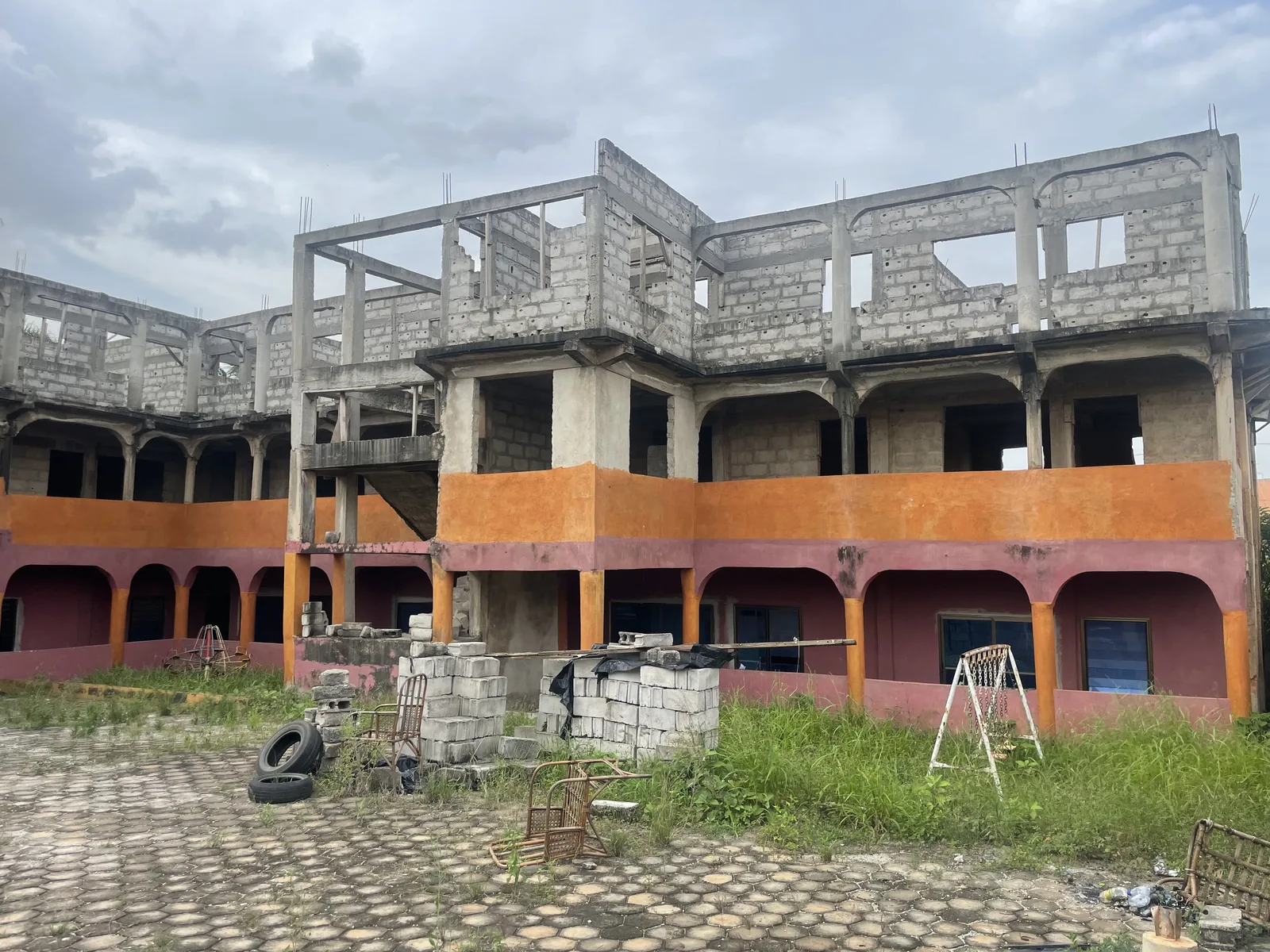
First we put up the walls and roofs: the shell. Then we finish the classrooms one by one, from the inside. That way the first classrooms can open while the rest still follows.
Every finished classroom is a class that can run straight away. The school grows with what comes in, without you having to wait until everything is done.
What it costs
Because we work small-scale and locally, without an expensive tender, the costs stay low and checkable. A few guide amounts from our own building budget.
One child goes to school for a month. The smallest amount with a direct, visible result.
The complete finishing and furnishing of a whole classroom: plastering, floor, windows, doors and furniture, carried out by the local building team.
We put up the walls and roofs beforehand with our own building team. After that every gift goes to the finishing, the most expensive and most visible part.
Because there is no expensive contractor and no tender in between, the money goes to materials and to the craftsmen who build. Every expense is in the annual accounts.
Why this way
Large aid projects often disappear into overhead, reporting and expensive parties. Building small-scale and locally does the opposite.
Without a big office and without a foreign contractor, almost every euro goes to materials and to the wages of the building team. You see in the annual accounts where it went.
The school is built by people from the region, for children from the region. That gives ownership, work and knowledge that stay. Your gift becomes wages for a Ghanaian craftsman, not a plane ticket for a volunteer.
Small means clear. We record every building phase on photo and you see the status per classroom. You can follow exactly what happens with your gift.
In practice
In Daban, a village below Kumasi in the Ashanti Region, we put this approach into practice. On Dennis's land our own building team has built a school with 24 classrooms up to the roof: the shell is standing. Now we finish the classrooms one by one. On the project page you see the progress per classroom, the status register and what the finishing still needs.
See the building project in DabanFrequently asked questions
You do not need to set up your own charity or find a contractor yourself. That is expensive and risky. We are already building in Daban with a local building team and on land in the community. You can join in by supporting the finishing of a classroom. That way you help build a school without doing all the hassle yourself.
The shell, the walls and roofs, goes up fastest. The finishing then happens classroom by classroom and depends on what comes in. The advantage of this approach: a finished classroom can open straight away. You do not have to wait until the whole school is done before teaching starts.
Because we work small-scale and locally, everything is checkable. We record every building phase on photo, you see the status per classroom, and every expense is in the annual accounts. Fofie Foundation is also an ANBI, so we account publicly. The board works unpaid.
The complete finishing and furnishing of a whole classroom costs about 6,000 euros: plastering, floor, windows, doors and furniture, carried out by the local building team. Smaller amounts are welcome too: thirty euros sends one child to school for a month.
Teachers' salaries run through the Ghanaian government, the Ghana Education Service. We build and furnish the school, the government provides the education itself. That way the school keeps running after it is built.
Join in
Thirty euros sends one child to school for a month. About 6,000 euros finishes a whole classroom. You see exactly where your gift goes. Fofie Foundation is an ANBI, so your gift is tax deductible.